Blog

  • Can you find the connections between these songs? | Connect the Songs game Ep. 6

    Can you find the connections between these songs? | Connect the Songs game Ep. 6 – Mixed Signals

    Video

    https://www.youtube.com/watch?v=EIVgoJpojTE

    Summary

    ### Summary
    The text discusses a musical game where participants find connections between songs and artists. The conversation touches on various topics such as old school hip-hop, Public Enemy and Aerosmith, Rick Rubin’s work with different genres, and the possible connection of Tricky Black Steel with Public Enemy. Additionally, the text mentions gossip about musicians like Tricky and Goldie, their collaborations, and rumors surrounding their relationships. The conversation also delves into the darker side of celebrity gossip, speculating on the nature of their relationships and involvement in each other’s lives.

    Highlights

    • A musical game where participants find connections between songs and artists
    • Old school hip-hop and its themes throughout the 80s and 90s
    • Potential collaboration between Public Enemy and Aerosmith
    • Rick Rubin’s work with various genres
    • Connection of Tricky Black Steel with Public Enemy
    • Rumors surrounding Tricky and Goldie’s personal lives
    • Goldie’s music recreated with an orchestra at the Royal Festival Hall

    Key Takeaways

    • The game aims to find connections between songs and artists, with different point values for easy, medium, and hard connections
    • The conversation discusses various celebrities and their relationships, as well as their involvement in each other’s lives
    • Goldie and Chester have both appeared in movies but not in the same movie

    Emojis: 🎵, 🏴󠁧󠁢󠁥󠁮󠁧󠁿, 🌐, 🚀

  • AI music has arrived! But WHY?

    AI music has arrived! But WHY? – Mixed Signals

    Video

    https://www.youtube.com/watch?v=T22_Q_B_SHk

    Summary

    ### Summary
    The text discusses the author’s experience with AI music-making apps and their potential impact on the music industry. It highlights concerns about originality, copyright issues, and the ethical implications of using AI-generated music. The text also explores the impact of AI on music monetization, artist income, and the value of human connection in music creation.

    Highlights

    • AI generates music that sounds legitimate, but questions arise about creativity and originality.
    • Music industry grapples with potential devaluation and ethical concerns.
    • The rise of AI artists may impact monetization and authenticity in the music industry.

    Key Takeaways

    • AI Music Controversy: AI-generated music raises ethical concerns, such as copying sounds and voices of deceased artists.
    • Devaluation and AI Artists: The music industry could become saturated with cheaper, AI-generated content, potentially leading to the devaluation of music and a shift away from supporting human artists.
    • Connection to Music: Humans may subconsciously crave authenticity and deeper connections with artists, which can’t be replicated by AI.
  • 7 songs you won’t believe are covers

    7 songs you won’t believe are covers – Mixed Signals

    Video

    https://www.youtube.com/watch?v=c0aEcPWNCgQ

    Summary

    ### Summary
    – Natalie and Bruger’s „Torn“ is a cover of Edna Swap’s rockier version released two years earlier
    – The Danish lyrics focus on the hot and cold dynamics of Liz Senson’s relationship, while the English version focuses on the realization of a failed promising relationship
    – Mark Ronson and Amy Winehouse’s version of Valerie is based on a song written by The Zutons in 2006
    – Björk’s „Quiet“ showcases her eccentric personality and vocal range, with origins tracing back to Betty Hutton’s 1951 arrangement

    Highlights

    • Natalie and Bruger’s „Torn“ is a massive hit song from their debut album Left of the-Middle
    • Song was first recorded in Danish by Liz Senson in 1993 under the name Brent
    • Mark Ronson claimed Amy Winehouse never listened to any music past 1967, so he was surprised when she suggested such a new song for their version of Valerie in 2007

    Key Takeaways

    • Britney Spears‘ „I Love Rock and Roll“ is a cover of Joan Jet & The Blackhearts‘ song from 1981, originally performed by the Arrows in 1975 under the title „Love Rock and Roll“
    • Alan Merill, the Arrows singer, wrote „I Love Rock and Roll“ as a response to The Rolling Stones‘ „It’s Only Rock and Roll But I Like It“
    • Tony Basil’s 1981 hit „Mickey“, with its cheerleading-inspired chant section, is also a cover. The original song is „Kitty“ by Ry Me by the Hand
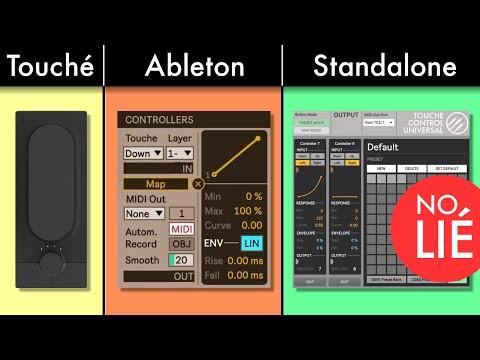
  • Touché without Lié | NEW Standalone & Ableton devices 2024

    Touché without Lié | NEW Standalone & Ableton devices 2024 – Mixed Signals

    Video

    https://www.youtube.com/watch?v=24iICgqhEFI

    Summary

    Summary:

    • Two new apps released for Ableton Touch A and Standalone
    • Addresses previous issues and includes user feedback from Discord
    • New features added to Ableton Device v2

    💡 Emojis for emphasis: 🚀 New Apps, 🔧 Updates & Improvements, 🤝 Community Collaboration, 🎉 Enthusiasm & Support

    Summary:

    • The text talks about setting up the Touche MIDI controller with Ableton Live.
    • Users can assign CC numbers for different directions and use the device’s screen to check assigned numbers.
    • The controller allows filtering specific information from other MIDI devices, has a „shift layer“ feature, and provides help through Ableton’s info view.
    • Essential Points: Control hardware directly by changing media output, Preset management for saving/loading setups, special features in TOUCHé SE model, Toggle between modes with long press, access help, join Discord, download app on a pay-what-you-want basis, support the channel, and Bitwig users can check out a similar device.
  • 7 covers you won’t believe are covers Part 2

    7 covers you won’t believe are covers Part 2 – Mixed Signals

    Video

    https://www.youtube.com/watch?v=wZpxRh6XwSk

    Summary

    ### Summary
    – Cindy Lorraine’s version of Girls Just Want to Have Fun is considered a feminist anthem, though originally by Robert Hazard.
    – Santana’s iconic song Oye Pena and Fleetwood Mac’s Black Magic Woman are originals by Tito Puente and Nina Simone respectively.
    – Led Zeppelin covered Jake Holmes‘ Dazed and Confused, but only credited and paid royalties after a lawsuit 40 years later.

    Highlights

    • Cindy Lorraine’s version of Girls Just Want to Have Fun as a feminist anthem
    • Santana’s Oye Pena and Fleetwood Mac’s Black Magic Woman are originals by Tito Puente and Nina Simone respectively
    • Led Zeppelin’s cover of Dazed and Confused without crediting or paying royalties to Jake Holmes, lawsuit after 40 years
    • UB40 covered Neil Diamond’s Red Red Wine without realizing it

    Key Takeaways

    • Girls Just Want to Have Fun originally by Robert Hazard, but Cindy Lorraine’s version is a feminist anthem.
    • Santana’s Oye Pena and Fleetwood Mac’s Black Magic Woman are originals by Tito Puente and Nina Simone respectively.
    • Led Zeppelin covered Jake Holmes‘ Dazed and Confused, but only credited and paid royalties after a lawsuit 40 years later.
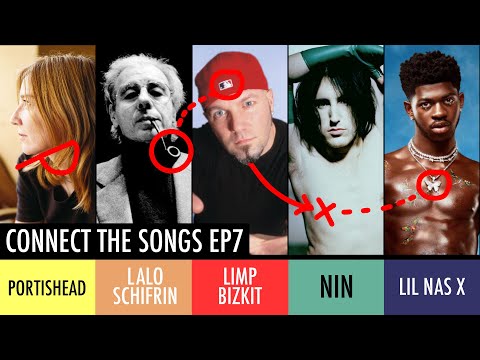
  • Connect the Songs Game: Portishead – Lalo Schifrin – Limp Bizkit – NIN – Lil Nas X

    Connect the Songs Game: Portishead – Lalo Schifrin – Limp Bizkit – NIN – Lil Nas X – Mixed Signals

    Video

    https://www.youtube.com/watch?v=1I0dMH_1EIY

    Summary

    Summary: The text is a transcript of a conversation about the song „Old Town Road“ by Lil Nas X, which samples a song by Ghostface Killah. Both artists are mentioned as approving and supporting each other’s work, with Lil Nas X taking a more ambient, downtempo 9in Nails sample and turning it into a huge hit for an audience that wouldn’t normally be familiar with 9in Nails. The song is from the album „Ghostface Killah Presents…,“ which includes multiple songs titled „Ghost.“ Ghostface Killah approved Lil Nas X’s use of his sample, and the collaboration was successful.
    Emojis: 🎵, 🎶, 🎉

    The text appears to be a transcript of a conversation where the speakers discuss a song and a record. The speaker mentions „closing“ and a song they remember but forgot to play the chorus. They then mention a game where they received points for their answers: 6 + 16 = 22, which is a new record. The speaker is excited and thankful for watching. They encourage viewers to share their scores and possibly win bonus points by beating Vasilis’s score. The conversation ends with the phrase „I’ve been in a valley you ain’t been up off that Porche now.“ Emojis: 🎵, 📚, 🎉

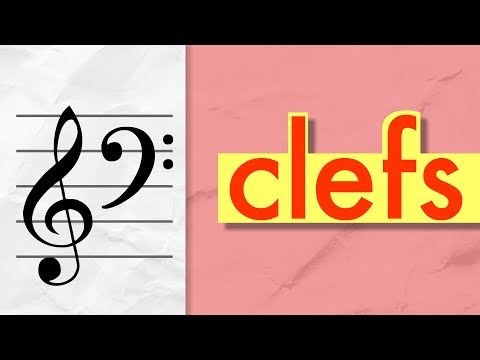
  • Clefs in Music explained | Music Theory for Beginners

    Clefs in Music explained | Music Theory for Beginners – Mixed Signals

    Video

    https://www.youtube.com/watch?v=LAmw9_B818g

    Summary

    ### Summary
    There are four main clefs in music: G Clef (Treble), Third Line CCF (Alto), Fourth Line CCFF (Tenor), and F Clef (Base). The Treble Clef is used for notes higher than middle C, while the Base Clef is used for notes lower than middle C. In some cases, a Grand Staff is used to showcase a wide range of notes for an instrument.

    Highlights

    • 🎵 There are four main clefs in music: G Clef (Treble), Third Line CCF (Alto), Fourth Line CCFF (Tenor), and F Clef (Base)
    • 🎹 The Treble Clef is used for notes higher than middle C, while the Base Clef is used for notes lower than middle C
    • 🎸 In some cases, a Grand Staff is used to showcase a wide range of notes for an instrument

    Key Takeaways

    • 🎵 Learn about the basics of musical theory from our other videos. Thanks for watching, and see you next time on Mix Signals!
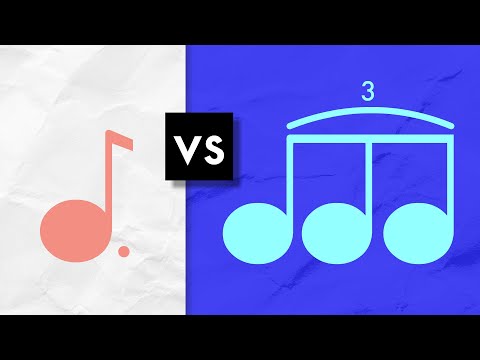
  • Dotted Notes vs Triplets | What’s the difference?

    Dotted Notes vs Triplets | What’s the difference? – Mixed Signals

    Video

    https://www.youtube.com/watch?v=lH81lPn6ZvM

    Summary

    ### Summary

    The text discusses the importance of understanding different note values in music, such as quarter notes, eighth notes, and 16th notes. Dotted notes and triplets are also explained, with a focus on their impact on rhythm and style. The concept of swing is introduced, and an invitation to leave a comment for future video content is provided.

    Highlights

    • Quarter notes, eighth notes, 16th notes, dotted notes, and triplets
    • Rhythmic interaction with quarter notes
    • Funk, Reggae, hip-hop, techno, house, EDM
    • Swing and organic bouncier sound
    • Invitation for future video content

    Key Takeaways

    • Understanding note values is crucial in music theory.
    • Dotted notes and triplets create unique rhythmic possibilities.
    • Swing adds an organic and bouncier feel to the beat.
  • Intervals | Music Theory for Beginners

    Intervals | Music Theory for Beginners – Mixed Signals

    Video

    https://www.youtube.com/watch?v=4SRqfLW_h4I

    Summary

    Summary: Intervals are an essential concept in music theory, measuring the difference in pitch between two notes. In Western music, there are seven basic note names, and an octave is subdivided into 12 equal steps known as semitones. Intervals have two characteristics: value (position on the scale) and quality (perfect, major, minor, augmented, or diminished). They are crucial for understanding how scales and chords are built.

    Highlights:
    – 🎹 Intervals measure the difference in pitch between two notes.
    – 🎵 There are seven basic note names: C, D, E, F, G, A, and B.
    – 🔊 An octave is subdivided into 12 equal steps called semitones.

    Key Takeaways:
    – 🎺 Understanding intervals helps in playing and composing music.
    – 🎶 Intervals are essential for grasping the concept of scales and chords.

  • Chords | Music Theory for Beginners

    Chords | Music Theory for Beginners – Mixed Signals

    Video

    https://www.youtube.com/watch?v=JEaj–mHz3I

    Summary

    ### Summary
    This episode discusses the basics of creating simple three-note chords, focusing on fundamental major and minor chords. It also covers augmented, diminished, and suspended chords, along with inversions for these chords. The transcript emphasizes understanding chord inversions as a key concept for mastering basic chords.

    Highlights

    • Major and Minor Chords: Building blocks of music theory
    • Augmented, Diminished, and Suspended Chords: Adding complexity
    • Inversions: Essential concept for understanding chords

    Key Takeaways

    • Master the basics before moving on to complex chords and progressions.
    • Chord inversions are applicable to all types of chords, not just major chords.
    • Practice identifying different chords and their inversions for a deeper understanding of music theory.

    Emoji Summary: 🎹🎶

    • Major Chord: 🌞
    • Minor Chord: 🌃
    • Augmented Chord: 🚀
    • Diminished Chord: 👻
    • Suspended Chords: ⚙️
    • Inversions: 🔄