Blog

  • I Tried Every Major Dating App So You Don’t Have To

    I Tried Every Major Dating App So You Don’t Have To – Evie Lupine

    Video

    https://www.youtube.com/watch?v=wqg2A7fq52E

    Summary

    🌟 Summary: In this discussion, the speaker shares their experiences with various dating apps such as Hinge, Bumble, Tinder, and OKCupid. They provide insights into each app’s unique features and compatibility systems, while also addressing the challenges and frustrations they encountered. The speaker highly recommends Hinge for its accurate compatibility system and unique profiles but acknowledges that it may not have a large user base depending on location. They give Tinder a low score due to its confusing design and aggressive advertising.

    🌟 Highlights:
    – Hinge is praised for its accuracy and unique profiles.
    – Tinder receives a low score due to confusion and aggressive advertising.

    🌟 Key Takeaways:
    – Hinge is recommended for accurate compatibility system and unique profiles.
    – Tinder receives low marks for confusing design and advertising.

  • Dominant Archetypes: What Type of Dom Are You? [BDSM]

    Dominant Archetypes: What Type of Dom Are You? [BDSM] – Evie Lupine

    Video

    https://www.youtube.com/watch?v=2mk81NCS_Nc

    Summary

    ### Summary

    In this text, the speaker discusses various archetypes in BDSM relationships and their motivations for power exchange. They mention hedonist, caregiver, absolutist, Royal, and Motivator archetypes. Each type has different preferences for dominance and submission, as well as different methods of communication and control.

    Highlights

    • Different archetypes in BDSM relationships include the Hedonist, Caregiver, Absolutist, Royal, and Motivator.
    • Each archetype has its own motivations and preferences for power exchange in relationships.
    • The text is a transcript of a video and part of an ongoing series about kink and BDSM topics.

    Key Takeaways

    • Understanding these various archetypes can help individuals find the right type of relationship dynamic for them.
    • These dynamics can vary from low-intensity weekend encounters to 24/7 total power exchange dynamics.
  • Neil Gaiman is a Monster, Not a Master

    Neil Gaiman is a Monster, Not a Master – Evie Lupine

    Video

    https://www.youtube.com/watch?v=C3TU_xIsp_c

    Summary

    ### Summary
    The text discusses allegations of non-consensual behavior against Neil Gaiman, who is alleged to have taken advantage of vulnerable individuals, particularly women. The author emphasizes the importance of understanding consent and recognizing when it is violated in BDSM relationships, which are meant to be based on informed, freely given consent. The text also mentions other creators with similar allegations against them and highlights the need for better education and awareness around BDSM practices to prevent exploitation.

    Highlights

    • Neil Gaiman faces multiple allegations of non-consensual behavior
    • Importance of understanding consent in BDSM relationships is emphasized
    • Other creators with similar allegations are discussed

    Key Takeaways

    • Consent is crucial in all relationships, including BDSM
    • Alleged exploitation and manipulation are concerning
    • Better education and awareness around BDSM practices needed
  • Dominant Archetypes: What Type of Dom Are You? [BDSM]

    Dominant Archetypes: What Type of Dom Are You? [BDSM] – Evie Lupine

    Video

    https://www.youtube.com/watch?v=2mk81NCS_Nc

    Summary

    ### Summary
    In this text, we discuss three types of Dominant-Submissive relationships – Caregiver, Hedonist, and Royal. Each type caters to different preferences and needs in a DS relationship, with the goal of ensuring both partners‘ satisfaction and personal growth. The archetypes include:
    1. Caregiver: Nurturing and attentive, they actively care for their submissive and tend to their needs directly.
    2. Hedonist: Focuses on pleasure, giving or receiving, with a mix of denial or indulgence techniques.
    3. Royal: Prefers others to take care of small tasks so they can concentrate on their interests and hobbies.

    Important Points:
    Caregiver: Nurturing and attentive, providing emotional support and teaching new skills.
    Hedonist: Focuses on pleasure, giving or receiving, with a mix of denial or indulgence techniques.
    Royal: Values self-confidence and trust, enjoying anticipatory service and pampering.

    Highlights

    • Caregivers enjoy teaching partners new skills or tasks, providing emotional support.
    • Hedonists focus on pleasure, giving or receiving, with a mix of denial or indulgence techniques.
    • Royals prefer others to take care of small tasks, allowing them to concentrate on their interests and hobbies.

    Key Takeaways

    • Caregiver: Nurturing, attentive, emotionally supportive, and teaching.
    • Hedonist: Pleasure-focused, giving or receiving, with a mix of denial or indulgence techniques.
    • Royal: Self-confident, trusting, enjoying anticipatory service and pampering.
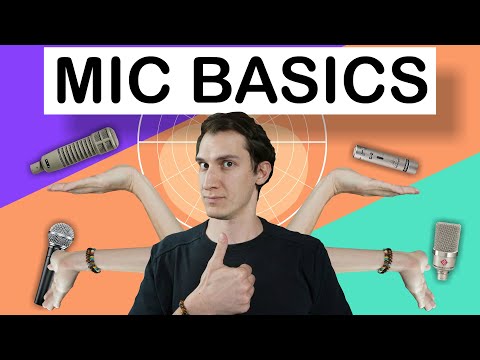
  • How do microphones work? Different microphone types and their characteristics explained

    How do microphones work? Different microphone types and their characteristics explained – Mixed Signals

    Video

    https://www.youtube.com/watch?v=ecPUTGDX5cw

    Summary

    ### Summary

    • Mixed Signals episode discusses various microphone types, their characteristics, and functionalities.
    • Microphones convert sound waves into electrical signals through transducers.
    • Dynamic microphones use electromagnetic induction for audio signal conversion; condenser and ribbon mics also exist.
    • Condenser microphones require external power and offer superior sound quality compared to dynamic mics.

    Highlights

    • Dynamic Microphone: Low sensitivity, doesn’t pick up background sounds, reacts well to loud sounds.
    • Condenser Microphone: Uses metal plates as a capacitor, needs external power (active), has a loudness threshold.
    • Phantom Power: Sends 48V electrical signal to condenser microphones.
    • Max Sound Pressure Level (Max SPL): Threshold above which signal starts to distort in condenser mics.

    Key Takeaways

    • Condenser and ribbon mics are more fragile and expensive than dynamic microphones.
    • Dynamics and condensers are the two most common microphone types.
    • Ribbon mics are thin and fragile, while shotgun mics are highly directional and used in film/TV.
  • What is an Audio Interface? Do I need one? FAQs answered // Audio Interfaces Part 1

    What is an Audio Interface? Do I need one? FAQs answered // Audio Interfaces Part 1 – Mixed Signals

    Video

    https://www.youtube.com/watch?v=wG7BtgSK2YY

    Summary

    ### Summary
    – Audio interfaces help computers exchange digital audio signals with analog and digital audio gear.
    – They perform digital signal exchange, analog signal conversion, and have multiple input/output channels.
    – Low latency is crucial for a smooth recording experience.
    – Important points to consider when choosing an interface: low latency, balanced outputs, high impedance connections, and more inputs or outputs.

    Highlights

    • Audio interfaces provide a way for computers to exchange digital audio signals with external analog and digital audio gear.
    • They convert analog signals into digital ones that computers can process and vice versa.
    • Important functions: Digital signal exchange, Analog Signal Conversion, Input/Output Channels, Low Latency

    Key Takeaways

    • Audio interfaces are essential for recording, mixing, and playing audio.
    • They amplify quieter analog signals like vocals or electric guitars to usable line levels.
    • The quality of the digital signal depends on sampling rate, bit depth, A/D and D/A conversion.
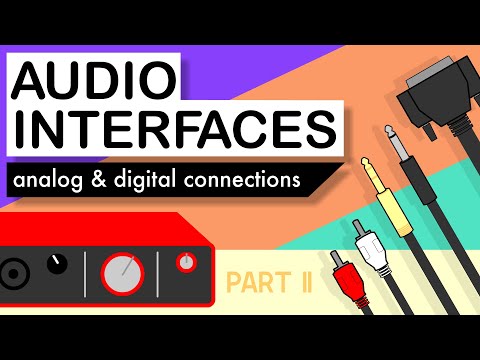
  • Balanced & Unbalanced, Analog & Digital, All Connections Explained // Audio Interfaces Part 2

    Balanced & Unbalanced, Analog & Digital, All Connections Explained // Audio Interfaces Part 2 – Mixed Signals

    Video

    https://www.youtube.com/watch?v=ejvIhp3kUgw

    Summary

    ### Summary
    This video is a continuation of a three-part series on audio interfaces. It discusses analog and digital connections found on audio interfaces, as well as balanced and unbalanced connections. Key types of connectors are outlined, including the TS quarter-inch jack for mono unbalanced signals, TRS quarter-inch jacks for stereo unbalanced or balanced connections, XLR and RCA connectors, DB25 for carrying eight balanced signals in parallel, and various digital audio interfaces like SPDIF, AES/EBU, ADAT Light Pipe, MADi, and MIDI.

    Highlights

    • Discusses analog and digital connections on audio interfaces.
    • Covers balanced and unbalanced connections and their uses.
    • Describes various types of connectors and their functions.
    • Introduces different digital audio interfaces and their applications.

    Key Takeaways

    • Unbalanced connections use quarter inch TS, stereo quarter inch TRS, eighth inch TS and TRS mini jacks, RCA connectors.
    • Balanced connections include XLR, TRS jack, XLR TRS combo jack, DB25.
    • Digital audio interfaces include SPDIF, AES/EBU, ADAT Light Pipe, MADi, and MIDI.
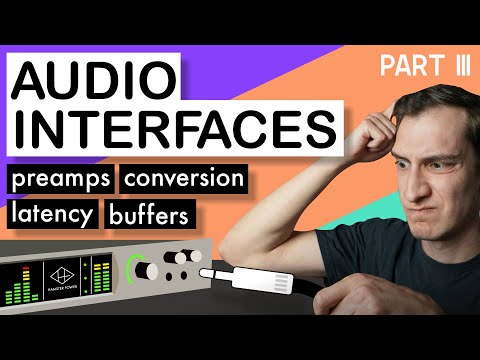
  • Preamps, Latency, Buffers, Analog to Digital Conversion // Audio Interfaces Part 3

    Preamps, Latency, Buffers, Analog to Digital Conversion // Audio Interfaces Part 3 – Mixed Signals

    Video

    https://www.youtube.com/watch?v=6OSLaZVVIFc

    Summary

    ### Summary
    In this video, the focus is on understanding the technical specifications of audio interfaces, such as different analog signal levels and the role of preamps. Key points include line level, mic level, and instrument level signals, and how preamps can vary in quality and features depending on their price range.

    Highlights

    • 3 types of analog signal levels: Line level, Mic level, and Instrument level
    • Preamp adds gain to weaker signals, raising them to line level for studio gear interfacing
    • Better preamps offer more features like phantom power, filters, polarity reversal switches, pads, etc.

    Key Takeaways

    • Understanding different analog signal levels helps when buying or building a recording rig
    • Preamp quality and features can significantly impact audio quality and capabilities
  • Reacting to Kanye West and Stevie Wonder | Arbiters of Sound music reaction videos

    Reacting to Kanye West and Stevie Wonder | Arbiters of Sound music reaction videos – Mixed Signals

    Video

    https://www.youtube.com/watch?v=r5wqA7mvlQw

    Summary

    ### Summary
    The text is an exciting conversation between two individuals discussing their music preferences. They share their thoughts on a track by Kanye West from his newest album, Donda (2021). The speakers also discuss the idea of separating an artist’s personality or actions from their work and how political views can affect opinions about an artist. Lastly, they touch upon the experimental approach of Kanye West in music, which they appreciate.

    Highlights

    • 🎵 Discussing Kanye West’s music and his strong points.
    • 🌟 Exploring whether it’s possible to separate an artist from their personality or actions.
    • 🎷 The strength of Kanye lies in his experimental approach to music, breaking away from industry norms.

    Key Takeaways

    • 💿 Appreciating recommendations and being open to new tracks or artists.
    • 🚀 Excitement for upcoming episodes of the series they are involved in.
  • Reacting to Anderson Paak duos NxWorries and Silk Sonic! | Arbiters of Sound music reaction videos

    Reacting to Anderson Paak duos NxWorries and Silk Sonic! | Arbiters of Sound music reaction videos – Mixed Signals

    Video

    https://www.youtube.com/watch?v=iVBo_EIR5Jo

    Summary

    ### Summary
    The transcript is about a conversation where the participants discuss their admiration for an artist whose unique voice and versatility in music they find incredible. They mention how they have seen him perform live at various venues including Tiny Desk, Romano (Italy), and Ally Pally (Alexandra Palace). The artist’s album „Malibu“ is considered special by the speaker, who has had the fortune to see him perform multiple times.

    Highlights

    • Discussion about a favorite artist
    • Mention of live performances at different venues
    • Appreciation for the artist’s album „Malibu“

    Key Takeaways

    • The artist’s unique voice and versatility are admired
    • Performances at various venues have left a strong impression
    • „Malibu“ is considered a special album by the speaker