Blog

  • My Top 5 Chord Progressions (+Chord Rotations?)

    My Top 5 Chord Progressions (+Chord Rotations?) – Holistic Songwriting

    Video
    https://www.youtube.com/watch?v=hlsc1WUvH_Q

    Summary

    ### Summary
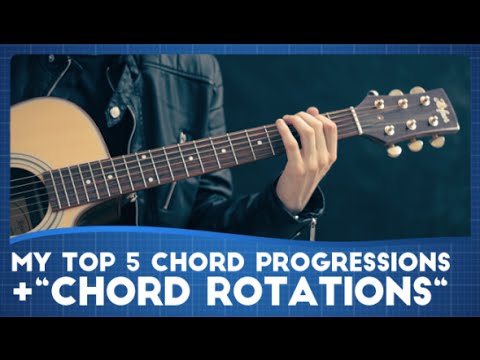
    The speaker discusses their top 5 favorite chord progressions in music, which are not ranked but presented in the order they were introduced. Each chord progression creates different feels and moods in songs. By starting on different notes within the chord progression, new sounds such as Mixolydian, Lydian, or Ionian can be achieved. The speaker also promotes their „Ultimate Songwriting Toolkit“ which includes 143 commercial chord progressions and provides over 400 different chord progressions to work with.

    Highlights

    • Top 5 favorite chord progressions
    • Not ranked, presented in the order introduced
    • Chord progressions create different feels and moods in songs
    • Chord rotations to create new effects

    Key Takeaways

    • Chord progressions can start on different notes within the progression to achieve various sounds
    • „Ultimate Songwriting Toolkit“ includes 143 commercial chord progressions and over 400 different chord progressions
  • How To Find Your $1M Song Title

    How To Find Your $1M Song Title – Holistic Songwriting

    Video

    https://www.youtube.com/watch?v=-BddG3E6JyU

    Summary

    ### Summary
    The text discusses how to find a perfect song title, emphasizing the importance of considering listening situations when creating a song title. The ideal song title should make it easy for listeners to remember and want to find out more about the song. There are three key factors in choosing a song title: Been A While Factor, DU Factor, and WTF Factor.

    Highlights

    • Choose a song title that can be seen or heard without knowing the title
    • Consider listening situations when creating a song title
    • The ideal title should make it easy for listeners to remember and want to find out more about the song

    Key Takeaways

    • Been A While Factor: brings back a song into the listener’s mind (e.g., „It’s Been a While“ by Staind)
    • DU Factor: every commercial song should have a clear and easily recognizable title that fits the song (e.g., „Uptown Funk“)
    • WTF Factor: makes listeners go „what the…“ and make them want to click on the song (e.g., „Wrecking Ball“)
  • Writing For Drums: The 5 Beats In Music

    Writing For Drums: The 5 Beats In Music – Holistic Songwriting

    Video

    https://www.youtube.com/watch?v=ZlW_ioA6cZU

    Summary

    Summary

    This text discusses the importance of emojis in music writing programs and tutorials, and explains the concepts of onbeats and offbeats. It also provides an example of a famous drum groove called „heavy standard“ and highlights the role of various instruments in creating grooves.

    Highlights
    – Music writing programs and tutorials with examples 📚
    – Understanding symbols and non-drers 🔍
    – Building groups using various instruments together 🎶
    – Famous drum Groove: „heavy standard“ 🥁
    – Onbeats (heavy counts) and offbeats (light counts) 🎼

    Key Takeaways
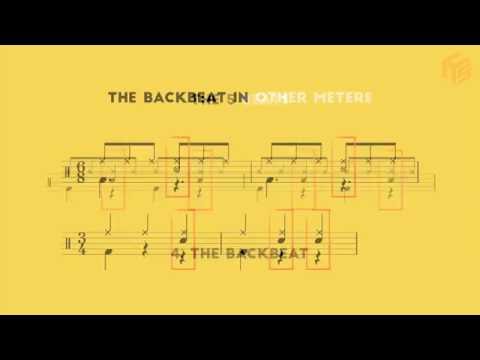
    – In a 4/4 time signature, onbeats are one, two, three, and four, with offbeats in between 🎶
    – Most important onbeat is the downbeat, followed by the backbeat 🌐
    – Fast-paced songs often have all offbeats as backbeats 🏃
    – Ballads use fewer backbeats, usually only on beat three 🎵
    – The only named offbeat is the upbeat, an unaccented beat before a new phrase begins 🎶

  • Use Music Influences Without Plagiarizing

    Use Music Influences Without Plagiarizing – Holistic Songwriting

    Video

    https://www.youtube.com/watch?v=GO9tnGKtP9g

    Summary

    ### Summary

    A professional songwriter uses inspiration from a song they like by identifying what makes it unique and then forgetting about the original song to create their own piece that sounds like them. They add a pinch of something new from the original song, giving it their unique touch. This allows them to incorporate ideas without plagiarizing. 🎶✨

    Highlights

    • Identifying key elements of the original song
    • Creating a unique piece that sounds like the songwriter
    • Adding a pinch of something new from the original song

    Key Takeaways

    • Professional songwriters can use inspiration without plagiarizing by focusing on what makes a song unique
  • What I Wish I Knew About Songwriting From The Start

    What I Wish I Knew About Songwriting From The Start – Holistic Songwriting

    Video

    https://www.youtube.com/watch?v=QHfHkFJLE4g

    Summary

    ### Summary
    – Importance of Music Production: Learning QBase, Logic, or Pro Tools is essential for today’s competitive songwriters.
    – Control in Music Making: Producing your own music allows you to decide the sound and effects used.
    – Endless Possibilities: Modern songwriting benefits from combining songwriting with music production.
    – Understanding Production Concepts: Knowing concepts like equalizing, compression, panning, and double tracking is crucial for professional songwriters.

    Highlights

    • 🎧 Importance of Music Production
    • 🎵 Control in Music Making
    • 🌈 Endless Possibilities
    • 🎛️ Understanding Production Concepts

    Key Takeaways

    • 🏆 Competitiveness in the music industry requires both high production quality and songwriting.
    • 🎶🎧 Use music production software like Logic, Protools, Ableton Live, or Qbase depending on your genre.
  • How To Write A GREAT Effin‘ Vocal Melody

    How To Write A GREAT Effin‘ Vocal Melody – Holistic Songwriting

    Video

    https://www.youtube.com/watch?v=jS6h7vH703o

    Summary

    ### Summary

    In this text, the focus is on understanding what makes a great vocal melody. The structure of a song depends on the music style and the intended outcome. For commercial songs, emphasis should be placed on structure and repetition. Motifs are also crucial for cohesion, while rhymes can be used to tie two lines together and create a larger scale. Intervals play a role in expressing specific emotions and providing structure. Lastly, bass pitches, line structure, bass lines, and using groove should also be considered. To learn more, one can visit holisticring.com.

    Highlights

    • Structure of a song depends on the music style and purpose.
    • Commercial songs require focus on structure and repetition.
    • Motifs are essential for cohesion in a song.
    • Rhymes can tie two lines together, creating a larger scale.
    • Intervals are used for specific emotions and to add structure.

    Key Takeaways

    • Structure of a song is crucial.
    • Utilize motifs and rhymes for cohesion.
    • Consider intervals, bass pitches, and line structure.
    • Check out holisticring.com to learn more.
  • How To Write A HIT SONG! (3 Pillars)

    How To Write A HIT SONG! (3 Pillars) – Holistic Songwriting

    Video

    https://www.youtube.com/watch?v=agSPAw_dgkA

    Summary

    ### Summary
    In this transcript, the speaker emphasizes the importance of hooks, groove, and lyrical storytelling in creating a successful musical composition. They also discuss how music has become more danceable over the years and the significance of production in addition to lyrics. 🎶🎵

    Highlights

    • Importance of hooks, groove, and lyrical storytelling in music
    • Music has become more danceable in the last 30 years
    • Significance of production and lyrics in songwriting

    Key Takeaways

    • Lyrics are often overestimated in importance compared to hooks, groove, and storytelling
    • Courses and books on hooks and melody creation, writing for live drums, and lyrical storytelling available
  • Create An ORIGINAL CHORD PROGRESSION!

    Create An ORIGINAL CHORD PROGRESSION! – Holistic Songwriting

    Video

    https://www.youtube.com/watch?v=YJnBXXl1j4M

    Summary

    ### Summary
    The text discusses the question of whether we will ever run out of chord progressions in music, considering different perspectives on defining a chord and using mathematical equations to calculate the number of possible chords based on the number of notes and the size of the chord. The possibilities for chord progressions are endless if you think about the possible chords and resulting chord progressions.

    Highlights

    • Different perspectives on defining a chord can lead to running out of chords quickly or creating something new and different.
    • Mathematical equation calculates the number of possible chords using n factorial / R factorial * nr R factorial, with n being the number of possible notes and R being the number of notes in the chord.
    • There are 3,828 different possibilities for new chords using just two notes; 10,197,32 different chords with three notes; 2,331,1890 different chords with four notes; and 39,575,72 possibilities with five notes (commonly used in music).
    • The text also mentions a website offering 143 chord progressions and tutorials on turning them into over 400 chord progressions using chord rotations.

    Key Takeaways

    • Chord progression possibilities are endless if you consider different perspectives on defining a chord and the number of possible chords in music.
    • The website offers resources for exploring and creating new chord progressions, such as a list of 143 chord progressions and tutorials on using chord rotations.
  • Playing By Ear Without Music Theory?

    Playing By Ear Without Music Theory? – Holistic Songwriting

    Video

    https://www.youtube.com/watch?v=mou4pXxnYN0

    Summary

    ### Summary

    The transcript discusses the relation between music theory and playing by ear. It highlights that understanding music theory can make it easier to identify chords, root notes, chord types, and extensions. Additionally, having knowledge of voicings and inversions is essential for playing by ear. While some musicians can play by ear without music theory, it’s more challenging and time-consuming.

    Highlights

    • 🎵 Music Theory is helpful: Knowledge of music theory makes it easier to play by ear.
    • 🎶 Chord Identification: Music theory helps in identifying root note, chord type (major/minor), and extensions (4th, 7, 9, 11, 13).
    • 🎵 Inversions & Voicing: Understanding voicings and chord inversions is essential for playing by ear.
    • 🎹 Guitarists/Musicians without Music Theory: Some guitarists or other musicians can quickly identify chords without music theory, but it’s more challenging and time-consuming.

    Key Takeaways

    • 🎹 Having a background in music theory makes playing by ear easier and more efficient.
  • Generating GREAT SONG LYRICS!

    Generating GREAT SONG LYRICS! – Holistic Songwriting

    Video

    https://www.youtube.com/watch?v=30TKSvGCI30

    Summary

    ### Summary

    In this video, SW Fistic discusses a two-word approach to help generate song lyrics by creating a list of interesting words, combining them, finding images or scenarios where they make sense together, developing a situation around those images, and writing lyrics based on the visual scenario. 🎶 💬

    Highlights

    • Two-word approach to generating song lyrics
    • Create a list of interesting words describing objects
    • Combine two chosen words, find scenarios where they make sense together
    • Develop a situation around those images and write lyrics based on the visual scenario

    Key Takeaways

    • The approach helps create strong, visual lyrics that work well in songs.