A/D Conversion, Sample Rate & Bit Depth for audio explained – Mixed Signals
Video
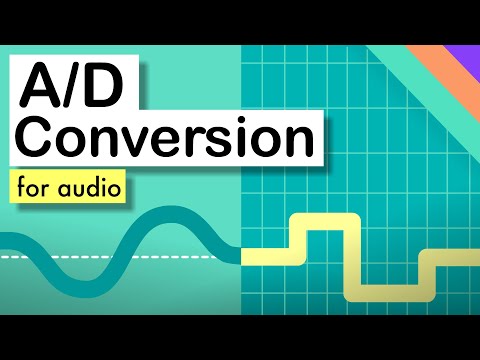
https://www.youtube.com/watch?v=-R4SNrdLSEI
Summary
### Summary
- Analog signals are continuous electrical signals that computers can’t understand, so they need to be converted into digital ones using A/D (Analog to Digital) and D/A (Digital to Analog) converters.
- The accuracy of conversion depends on sampling rate and bit depth.
- Standard sample rate is 44.1 kHz for CDs, mp3s, etc., and 16 bits is standard for most digital audio.
Highlights
- 📡 Converters: A/D and D/A are used to convert analog signals into digital ones that computers can understand.
- 🔍 The accuracy of the conversion depends on the sampling rate (how often it’s performed) and bit depth (how many values are used).
- 💻 The standard sample rate for digital audio is 44.1 kHz, and 16 bits is standard for most digital audio.
Key Takeaways
- 🔊 Analog signals need to be converted into digital ones for computers to process them.
- ⚙️ The accuracy of the conversion depends on the sampling rate (how often it’s performed) and bit depth (how many values are used).
- 📅 The standard sample rate for digital audio is 44.1 kHz, and 16 bits is standard for most digital audio.
Schreibe einen Kommentar