Voice Lessons: Understanding Vibrato – Rejoice In Your Voice – Tricia Leines
Video
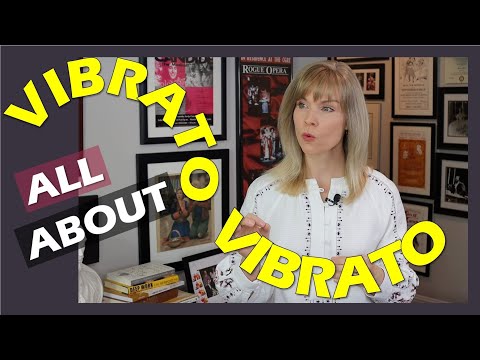
https://www.youtube.com/watch?v=KZePVTsjrpY
Summary
Summary
Vibrato is a crucial aspect of singing that affects both classical and contemporary singers. It’s essential to separate vibrato from music genres to make informed choices about vocal production. An appealing vibrato oscillates at a frequency between 4.5 to 6.5 hertz, and every singer should aim for a healthy vibrato regardless of their style.
Highlights
- Separating vibrato from the genre of music is crucial.
- The appealing vibrato comes from well-aligned vocal technique and refined breath, posture, vowels, and coordination.
- Every singer should aim for a healthy vibrato regardless of their style as it’s a sign of good vocal alignment.
Key Takeaways
- Vibrato is produced by intrinsic muscles in the larynx, specifically the cricothyroid muscle.
- To help clients achieve their desired vibrato, assess posture, breathing, larynx function, extrinsic muscles, diction, vowel production, etc., for a balanced technique.
Techniques to Improve Vibrato
- Focus on allowing natural breath flow while singing and incorporating movement to enhance relaxation and vocal freedom.
- Maintain continuous air movement between pitches for smooth transitions, observe when vibrato naturally enters during sustained notes, and recreate that feeling throughout phrases.
Emphasizing the importance of emojis, creating a quieter tone, and maintaining healthy vocal technique:
- Creating a quieter tone gives more space for vibrations to bounce around, preventing the need to fill every empty space with voice.
- Focus on proper resonance without pushing, check tongue and jaw position while singing for optimal vocal balance.
Vibrato exercises and stylistic choices:
- Use the „ng“ consonant blend moving to a vowel as a warm-up for healthy vibrato.
- Experiment with adding vibrato on specific notes in contemporary speech-based styles or using straight tone with occasional vibrato for expressive purposes, focusing on serving the lyrics.
Emphasizing the importance of vibrato:
- It can be applied to any genre; initially it might feel weird and out of control but it’s okay.
- Having a vibrant toolbox doesn’t turn you into a classical singer; it enhances your abilities.
For classical singers, they don’t need to hate their vibrato. A good vocal technique can lead to an appealing vibrato. The speaker encourages the viewers to have fun with these exercises, ask questions and always welcomes feedback. They end by telling the audience to rejoice in their voice.
Schreibe einen Kommentar